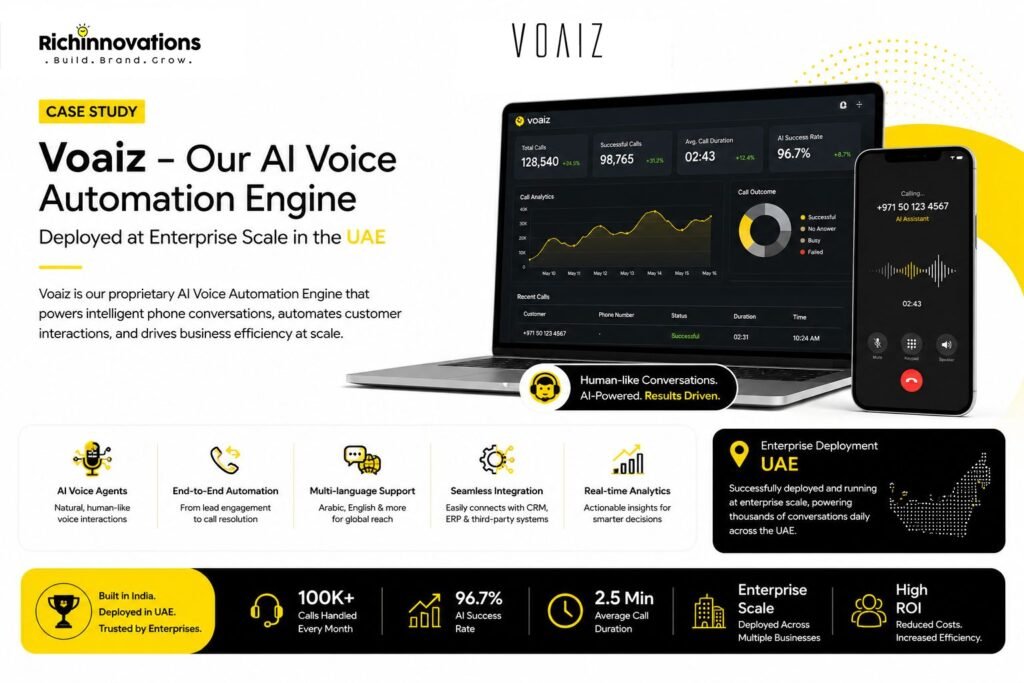
Voaiz is our own product. We launched it on 6 January 2025, alongside Richinnovations’ tenth anniversary, as a next-generation AI voice automation engine built to handle the conversations businesses have at volume — cold calls, support calls, reminders, grievance handling and follow-ups — with intelligent, natural dialogue rather than the rigid menu trees customers have learned to dread. Building a product is one thing; proving it in a demanding market is another. This case study covers the deployment of Voaiz for an enterprise client in the United Arab Emirates, an environment that tests a voice platform harder than most. The UAE is one of the most linguistically diverse commercial markets in the world, where a single customer call may move between Arabic, English and a South Asian language in the space of a sentence. The client’s existing operation depended on a human call team that could not scale with demand, and the implementation timeline was tight. Because Voaiz already existed as a mature product rather than a bespoke build, we were able to move directly to configuration, language tuning and integration — deploying inside the client’s timeline, at the response speeds a live conversation demands, and with a workforce transition managed carefully enough that the client’s people ended up doing more valuable work rather than less.