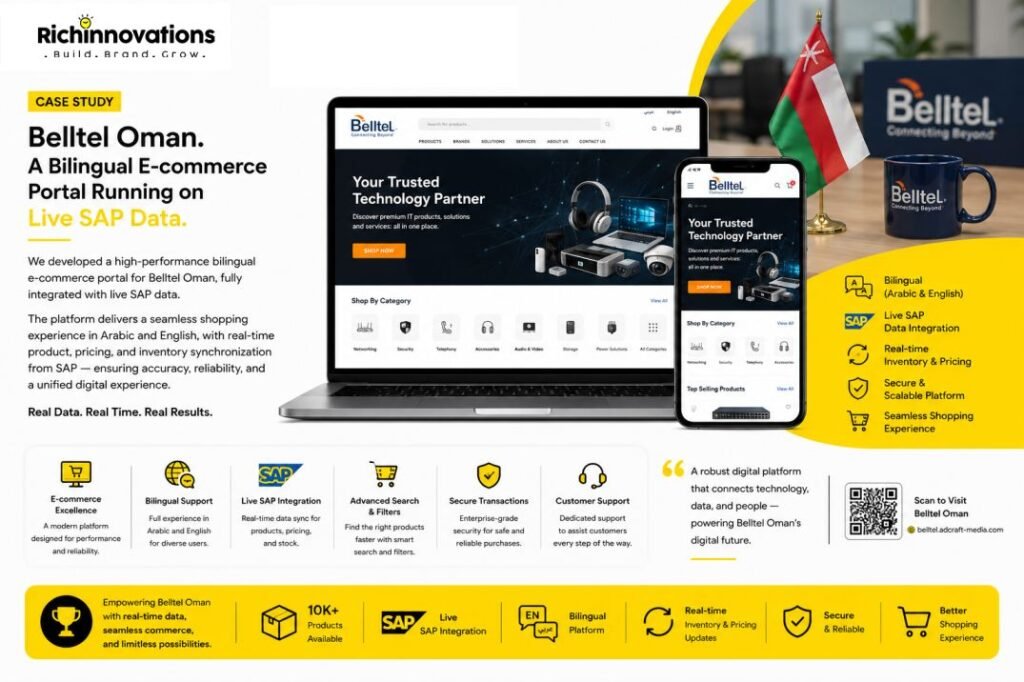
1. We integrated the storefront directly with SAP. The e-commerce platform was connected to Belltel’s SAP backend so that product, pricing and stock information flows from the system of record into the storefront. Rather than asking the client to maintain a parallel catalogue, we made the website a customer-facing view of data the business already trusts — eliminating dual entry and the pricing and availability mismatches that come with it.
2. We let SAP own the business logic. Pricing and availability rules stay where they belong, inside the ERP. The storefront consumes the result rather than reimplementing the rules, which means the online channel stays consistent with the rest of the business as those rules change over time.
3. We built a fully custom design rather than adapting a template. The storefront was designed specifically for Belltel — category presentation, product cards, promotional structure and navigation across a broad multi-brand catalogue. Bang & Olufsen is given its own dedicated brand destination and presentation appropriate to premium audio, while Samsung ranges are organised into series-level navigation matching how customers actually shop for them.
4. We delivered a complete bilingual English and Arabic experience. The platform runs in both languages, with Arabic available across the storefront rather than confined to marketing pages. Language switching is available throughout, so customers move between the two without losing their place.
5. We configured the platform correctly for Omani commerce. Pricing displays in Omani Rial to three decimal places throughout, with promotional pricing, percentage discounts and free-shipping thresholds all expressed in local terms. Details like these determine whether a store feels built for its market or adapted to it.
6. We built on WordPress so the client controls their own merchandising. Belltel’s team manages products, categories, brand pages, promotional banners, flash deals, blog content and campaign sections directly. Retail moves quickly, and the client’s ability to act on that without a development queue was a design requirement rather than a convenience.
7. We implemented full e-commerce and customer account functionality. Registration and login including Google sign-in, wishlists, recently viewed products, cart, checkout, order tracking, and published returns, exchange and terms policies. The complete customer journey from discovery to post-purchase support was delivered, not just a catalogue with a buy button.
8. We enabled a multi-vendor marketplace model. The platform supports vendor registration and vendor storefronts alongside Belltel’s own catalogue, giving the business the option to extend into a marketplace with additional sellers without a replatform.
9. We built merchandising and promotional tooling into the store. Flash sale sections with countdown deals, discount display against original pricing, featured and new-arrival modules, brand and series landing pages, and newsletter capture for promotional marketing — the tools a consumer electronics retailer needs to run active campaigns.
10. We accounted for the enterprise side of the business. Alongside consumer retail, the storefront carries an Enterprise & Education route, reflecting that Belltel’s customer base includes institutional buyers as well as individual consumers.