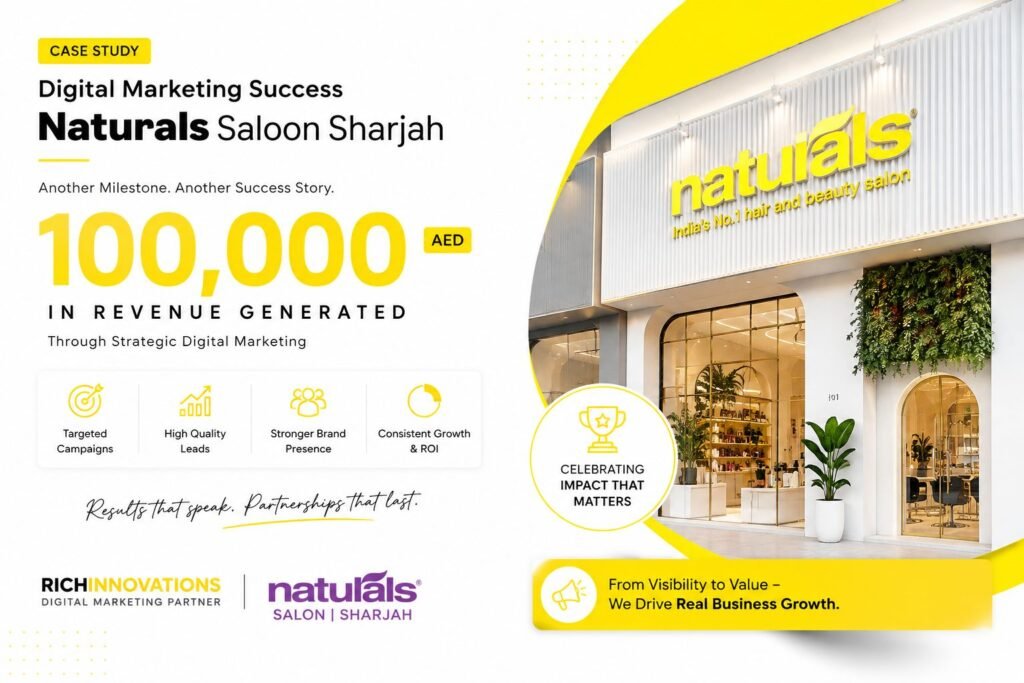
Naturals Ladies Beauty Salon in Sharjah operates in one of the most competitive local service markets in the UAE. Beauty and grooming in the Emirates is a crowded category where customers have dozens of options within a short drive, discovery happens almost entirely on social platforms, and a salon’s growth depends on a steady flow of genuine bookings rather than vanity metrics. When Naturals came to us, they had already worked with multiple marketing providers. The pattern each time was familiar: activity happened, budget was spent, and enquiries did arrive — but too few of them were real customers. Junk and spam enquiries consumed the team’s time, organic growth had flattened, and the salon had reached the point where marketing felt like a cost centre rather than a growth engine. We took over their social media management, creative production and paid advertising as a single integrated function. Rather than optimising for reach, we rebuilt the operation around the only metric that mattered to the business — genuine, qualified customers walking through the door. The engagement went on to contribute to the salon crossing an AED 100,000 milestone, acknowledged directly by the client, who described our team as having supported them “like a committed business partner rather than a service provider.”
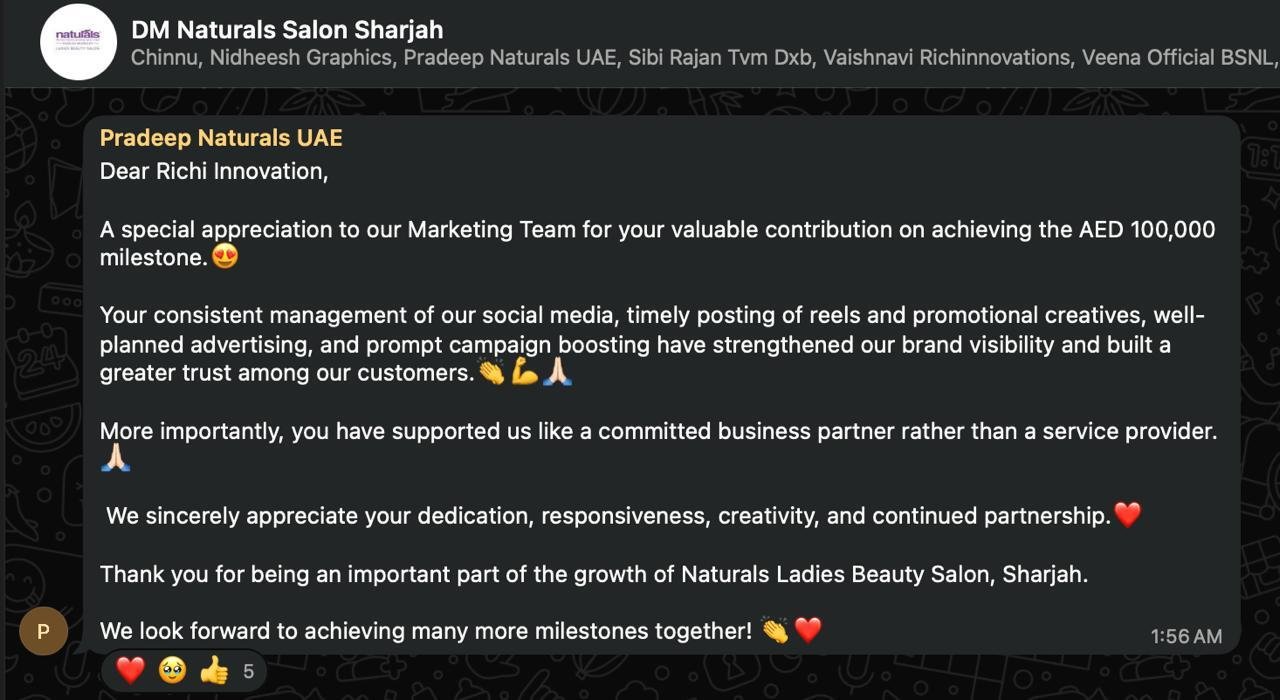
Posting this message with the consent of the client
Shri. Pradeep, Naturals UAE
“A special appreciation to our Marketing Team for your valuable contribution on achieving the AED 100,000 milestone. Your consistent management of our social media, timely posting of reels and promotional creatives, well-planned advertising, and prompt campaign boosting have strengthened our brand visibility and built a greater trust among our customers.
More importantly, you have supported us like a committed business partner rather than a service provider. We sincerely appreciate your dedication, responsiveness, creativity, and continued partnership.
Thank you for being an important part of the growth of Naturals Ladies Beauty Salon, Sharjah. We look forward to achieving many more milestones together!”